
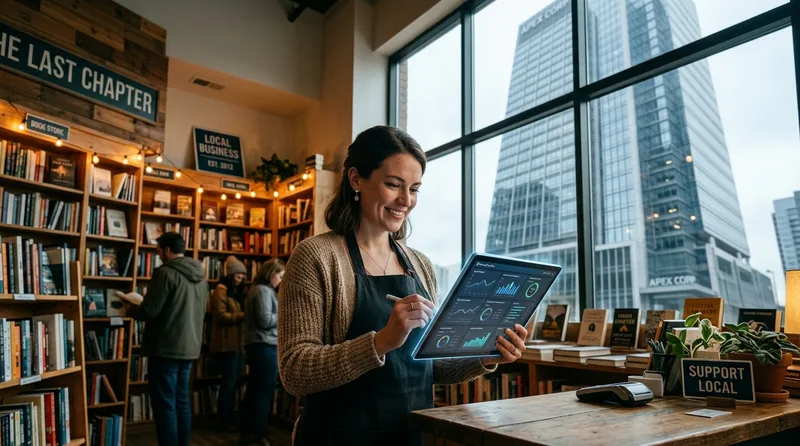
The image of a local business owner often conjures up scenes of manual inventory counts, late-night bookkeeping, and a constant, frantic juggle to engage customers through word-of-mouth marketing. For decades, these small enterprises struggled to compete with the sheer scale and technological prowess of multinational corporations. However, the rapid democratization of artificial intelligence (AI) is shifting this paradigm, providing local shops, restaurants, and service providers with the digital tools necessary to operate with the efficiency of a giant while maintaining the personal touch of a neighborhood staple.
Optimizing Inventory and Supply Chain Management
One of the most persistent challenges for local retailers is the 'goldilocks dilemma' of inventory: keeping enough stock to meet demand without tying up precious cash flow in excess products that gather dust on shelves. AI-powered predictive analytics tools now allow even the smallest boutique or hardware store to forecast demand with remarkable accuracy. By analyzing historical sales data, local seasonal trends, and even local weather patterns, these systems suggest optimal reorder points. Instead of relying on gut instinct, a local florist can use AI to anticipate spikes in demand for Valentine's Day or Mother's Day, reducing waste and ensuring the shop never runs out of popular inventory during critical revenue windows.
Personalizing the Customer Experience
Local businesses thrive on relationships, but as a business grows, it becomes harder for an owner to remember the preferences of every regular customer. AI-driven Customer Relationship Management (CRM) platforms are bridging this gap. These systems can track purchase history and provide personalized recommendations that feel genuine. For example, a local coffee shop could deploy an AI-integrated loyalty app that identifies a customer’s usual order and sends a personalized discount notification when it has been a few days since their last visit. This isn't just automation; it is the modern digital equivalent of a shopkeeper greeting a patron by name and having their coffee ready on the counter before they ask.
Revolutionizing Local Marketing and Content Creation
For a long time, professional-grade marketing was an expensive luxury reserved for companies with large advertising budgets. Today, generative AI tools have leveled the playing field. Local business owners can now leverage AI writing assistants to generate engaging social media posts, email newsletters, and blog content in minutes. Graphic design AI tools allow a bakery owner to create professional, eye-catching flyers and advertisements without needing a degree in design. By using localized SEO tools powered by AI, businesses can ensure their digital presence ranks higher in 'near me' searches, capturing local foot traffic that might have otherwise gone to a national competitor.
Streamlining Administrative and Operational Tasks
Behind every successful local storefront is a mountain of paperwork. AI is proving to be a powerful assistant in automating these mundane tasks. From AI-driven accounting software that automatically categorizes expenses and flags tax deductions to automated scheduling tools for salons and fitness studios, the time saved is immense. Furthermore, AI chatbots for local service businesses—such as plumbers, HVAC technicians, or law firms—can handle initial client inquiries, schedule appointments, and provide basic pricing information 24/7. This ensures that the business is always 'open' to potential clients, even when the owner is off the clock.
Enhancing Local Workforce Productivity
In a tight labor market, local businesses often find it difficult to hire and train enough staff. AI tools are helping maximize the productivity of existing teams. For example, in the restaurant industry, AI-integrated Point-of-Sale (POS) systems can analyze kitchen throughput to suggest better workflow processes, reducing wait times during lunch rushes. In retail, AI-driven workforce management software can analyze historical foot traffic to suggest more efficient staff scheduling, ensuring there are enough employees during peak hours without overstaffing during slow periods. This data-driven approach keeps costs low and employee morale high by reducing unnecessary burnout.
Security and Loss Prevention for Small Retail
Physical security is a significant concern for storefronts. AI-enhanced surveillance systems are moving beyond simple video recording. Modern security solutions can now detect unusual activity patterns after hours and send real-time alerts to a business owner’s smartphone. Furthermore, AI-based computer vision in retail can help identify common patterns associated with inventory shrinkage or theft, allowing owners to take proactive steps to secure their goods. For a small business owner operating on thin margins, these preventative measures can be the difference between profit and loss at the end of a fiscal year.
Navigating the Path Forward
Adopting AI doesn't require a background in computer science. The current landscape of AI tools is designed with the non-technical user in mind, emphasizing intuitive interfaces and 'plug-and-play' functionality. The most successful local business owners are those who start small—perhaps by using an AI tool to improve their email marketing or to automate their appointment scheduling—before expanding to more complex integrations. The goal is not to replace the human element that makes local businesses special, but to empower owners and staff to focus more on their craft and their customers, rather than being bogged down by the drudgery of operational tasks.
As we look to the future, the integration of AI in our local economies promises to revitalize Main Street. By embracing these technological advancements, small business owners are securing their relevance in an increasingly digital world, ensuring that the unique character of our local communities can survive and thrive for generations to come. The era of the AI-powered local business is here, and it is a win for both the entrepreneurs who run these shops and the neighbors who depend on them.
Comments
No comments yet. Be the first to share your thoughts.
Join the conversation
Log in to leave a comment on BLocal AI Marketing.